Rethinking Language Assessment in the Age of AI
Key Insights from Zeynep Urkun
Key Insights from Zeynep Urkun
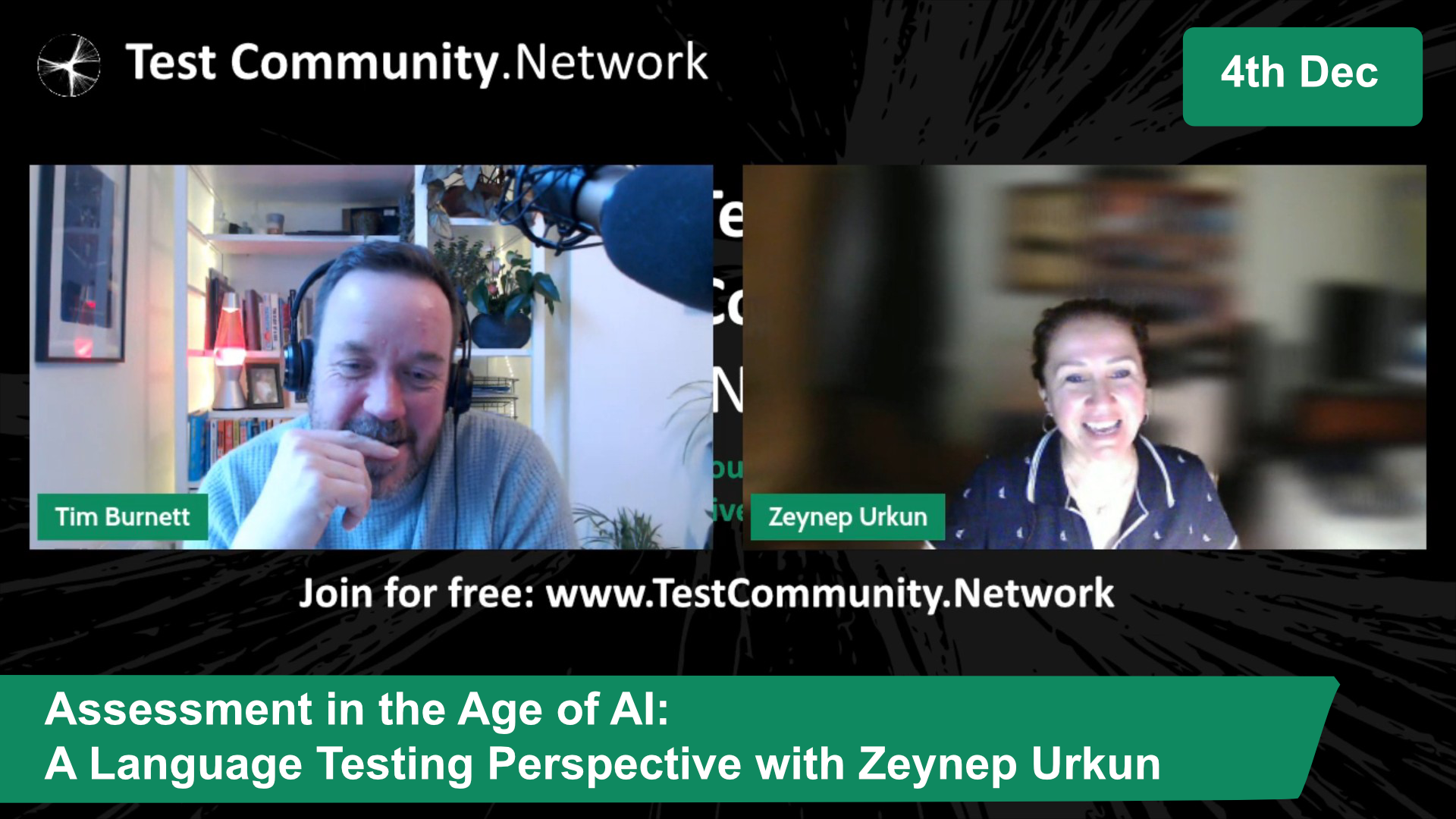
In a recent conversation on the Test Community Network podcast, language assessment specialist Zeynep Urkun shared her perspectives on how AI is transforming the field of language testing—and why traditional methods are struggling to keep pace with modern workplace demands.
The Assessment Gap
One of the most pressing challenges Zeynep highlighted is the mismatch between current assessment practices and real-world language requirements. Traditional tests have typically assessed language skills in isolation—reading, writing, speaking, and listening evaluated separately. However, the workplace demands something quite different: integrated communication where these skills work together seamlessly.
"There's a mismatch between what is on offer and what is expected in the employment scene," Zeynep explained, "because current assessment methods have been around for quite a while."
Moving Towards Authentic Assessment
The solution? More authentic, holistic assessment tasks that mirror real-world scenarios. Zeynep emphasised the importance of:
AI: Opportunity and Challenge
The rapid advancement of AI presents both exciting possibilities and significant concerns for language assessment. On one hand, AI tools can support genuine language learning when used correctly. Chatbots, for instance, are being developed to assess spoken language, adapting their responses based on learner input.
However, Zeynep cautioned that AI can also hinder learning if students rely on it to simply complete assignments without truly engaging with the language. "We don't know whether actual learning has taken place or not," she noted.
Innovation in Turkey
Speaking from Istanbul, Zeynep shared encouraging developments in Turkish education. Institutions across the country are experimenting with AI-assisted assessment, including projects comparing AI scoring with human evaluation for speaking tests. The results have been promising.
"One of the biggest advantages of the current scene is it's pushing people to be very innovative," Zeynep observed. "People have picked up very quickly that if they don't catch up, then they will be left behind."
The Digital Divide
Despite the excitement around technological innovation, Zeynep reminded us of a sobering reality: one-third of the world still lacks regular access to the internet or even electricity. This raises critical questions about equity in education and assessment.
Additionally, large language models have been predominantly trained on English text, leaving languages like Arabic—spoken by a significant portion of the global population—underrepresented. These imbalances must be addressed as we move forward.
Looking Ahead
As the field of language assessment continues to evolve at an unprecedented pace, Zeynep's message is clear: innovation must be balanced with responsibility, equity, and a focus on authentic learning outcomes. The goal isn't simply to adopt new technology, but to ensure that assessment practices genuinely prepare learners for the complex, integrated language demands of the modern workplace.
The conversation serves as a timely reminder that whilst AI offers powerful tools for assessment, the human element—careful task design, ethical considerations, and a commitment to genuine learning—remains irreplaceable.